Analysts say Binance reserves remain stable despite new allegations tied to FTX 2.0 manipulated accounts, raising fresh debate about exchange transparency and user trust.
Crypto VC funding rebounded strongly in 2025, doubling year-over-year as real-world asset (RWA) tokenization emerged as the dominant narrative attracting institutional capital and reshaping blockchain investment trends.
Railsr, a regulated digital finance provider, is partnering with the Stellar network to launch on-chain vaults for digital assets blending regulated custody with blockchain settlement and opening new pathways for institutional crypto use cases.
Institutional money is returning to crypto this year, with notable venture rounds and a significant on-chain credit deal signaling renewed interest in infrastructure, financial services, and real-world use cases, even amid broader market caution.
Despite notable downturns in many DePIN project tokens, decentralized physical infrastructure network revenues continue to rise, signaling demand for real-world data and services that run atop blockchain incentives.
A new DePIN initiative on Solana is building a decentralized sensor network using self-driving cameras and robotics, aiming to create a blockchain-native marketplace for real-world data with crypto-based incentives for participants.
RedStone, a leading oracle and data infrastructure provider, has acquired Security Token Market and the TokenizeThis conference is to deepen its role in institutional tokenization and strengthen its presence in the U.S. real-world asset sector.
Ethereum co-founder Vitalik Buterin says protocol complexity is becoming a hidden threat to the network’s core principles and calls for a “garbage collection” approach to simplify and streamline the blockchain’s long-term development.
Vitalik Buterin’s insights on decentralized stablecoins offer a nuanced roadmap for DeFi’s future emphasizing resilient design, risk mitigation and community-centric models that could shape the next era of digital finance.
Commerce platforms are exploring how blockchain and tokenization can transform traditional loyalty points into a portable, tradable asset class redefining customer engagement, cross-platform rewards, and digital ownership.
BNY Mellon has launched tokenized deposits on an internal blockchain for institutional clients, marking a major push by a global bank to modernize payments, collateral, and settlement using programmable digital cash.
Binance Smart Chain’s major network upgrade, the Fermi hard fork, is scheduled for January, promising performance boosts, enhanced protocol features and improvements designed to strengthen BNB Chain’s decentralized infrastructure.
Bhutan is pioneering a sustainable Bitcoin economy, leveraging its abundant hydropower and national Bitcoin reserves to fuel long-term development, attract talent, and integrate digital assets into its future economic framework.
Institutional tokenization is moving from concept to reality as Redbelly Network outlines how compliant, on-chain infrastructure is enabling real-world asset issuance for institutions.
YouTube’s rollout of stablecoin payouts lets U.S. creators receive earnings in PayPal’s PYUSD—a move that could accelerate crypto adoption, streamline payments and usher in new financial flexibility for digital creators.
Poland’s government has reintroduced a vetoed crypto regulation bill nearly unchanged, reigniting fierce debate over how the country will implement the EU’s MiCA framework and balance innovation with oversight.
Mubadala Capital teams up with KAIO to explore on-chain access to private market funds, a landmark move towards tokenized real-world assets and broader institutional participation in crypto.
Bittensor’s first halving cuts TAO issuance in half, signaling the network’s maturation toward a fixed 21 million supply a move that could reshape incentives for miners, validators and AI service providers across its decentralized subnet ecosystem.
Solmate Infrastructure launches a high-performance Solana validator in Abu Dhabi, backed by RockawayX and major investors, marking a new phase of regional crypto infrastructure and SOL staking.
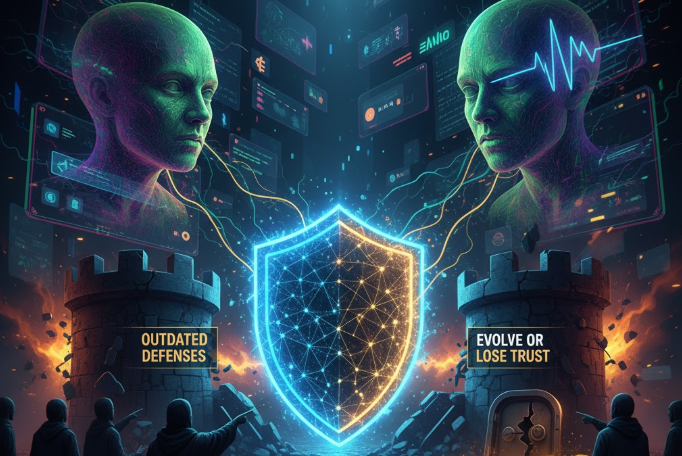
In 2025, crypto fraud has evolved into a high-speed arms race. Deepfakes, cloned voices, and synthetic customer-support bots are no longer fringe tools; they’re mainstream weapons in the hands of sophisticated attackers. Fraud revenues in the sector topped $9.9 billion last year, driven largely by AI-assisted scams, while over $2.17 billion has already been stolen in the first half of this year alone.