A Himalayan Nation’s Bold Crypto Strategy
Bhutan, a small Himalayan kingdom known for its Gross National Happiness philosophy and pristine natural landscapes, is quietly charting an ambitious path to blend blockchain technology with environmental stewardship and economic development. Rather than treating digital assets as a speculative venture, the country is integrating Bitcoin into its broader economic strategy, using clean energy to mine BTC and positioning itself as a leader in a green Bitcoin economy.
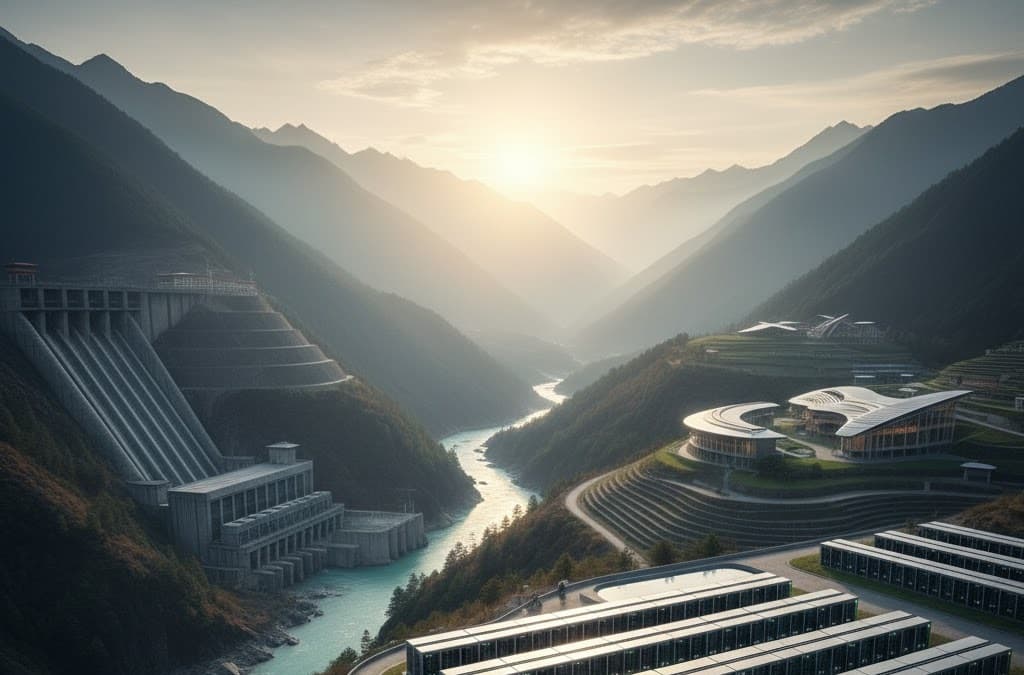
Central to this vision is the use of Bhutan’s abundant hydroelectric power. Bhutan runs almost entirely on renewable energy generated from its fast-flowing rivers, giving it a rare advantage: excess clean electricity that can be applied to compute-intensive tasks like Bitcoin mining without carbon emissions. This renewable backbone allows the nation to mine Bitcoin in a way that aligns with global environmental priorities while also creating economic value.
In addition to generation capacity, Bhutan’s sovereign wealth fund, Druk Holding and Investments (DHI), began actively adding Bitcoin and other digital assets to its portfolio starting in 2019, building one of the largest government-controlled Bitcoin reserves in the world. The strategy is not about short-term price movements; it is about deliberately harnessing digital assets to support national goals.
Hydropower and Sustainable Mining: Turning Energy Into Value
At the heart of Bhutan’s green Bitcoin economy is the use of 100% hydropower. This sustainable source of electricity meets the dual goals of environmental responsibility and economic practicality. During peak water flow months, especially in summer when glacial melt swells rivers and generates surplus energy, Bhutan has historically faced the challenge of unused electricity. Rather than selling surplus power cheaply to neighboring countries or letting it go idle, the government has allocated it to fuel Bitcoin mining operations.
This approach effectively turns excess renewable energy into a store of financial value. Bitcoin mined with hydropower can be held as a strategic reserve, used to fund government initiatives, or sold to generate foreign currency liquidity. Officials often describe this practice as creating a form of “energy-backed asset,” helping the kingdom make productive use of its natural resources.
By converting renewable energy into digital assets, Bhutan offsets the environmental footprint of Bitcoin production, a notable contrast to mining operations in other regions that rely on fossil fuels. In doing so, the country positions itself at the intersection of economic innovation and sustainability, appealing to investors and stakeholders who prioritize environmental, social, and governance (ESG) goals.
Integrating Bitcoin Into National Development Goals
Bhutan’s embrace of Bitcoin goes beyond mining and investment. The government’s recent announcement that up to 10,000 BTC could be allocated toward the development of the Gelephu Mindfulness City (GMC) underscores the serious role digital assets play in the nation’s future. Gelephu Mindfulness City is envisioned as a special administrative region designed to reverse youth outmigration, attract finance and technology firms, and create high-value jobs across multiple sectors, including green energy, tourism, healthcare, and tech.
In this context, Bitcoin serves as both a financial engine and a strategic asset class that provides flexibility in funding large-scale public projects. Rather than relying exclusively on traditional debt financing or aid, Bhutan sees digital reserves as a resource that can be managed directly for growth and innovation.
This integration of Bitcoin into national development planning reflects Bhutan’s willingness to rethink traditional economic structures. By positioning digital assets alongside renewable energy and human capital initiatives, the country is experimenting with an economic model that emphasizes both technological relevance and environmental harmony.
Partnerships, Talent Development and Digital Infrastructure
Bhutan understands that a sustainable Bitcoin economy must be supported by talent and infrastructure, not just energy and reserves. To that end, the government and Gelephu Mindfulness City authorities have entered into partnerships with global digital asset firms to build institutional capability on the ground.
One notable example is a multi-year memorandum of understanding with Cumberland DRW, a well-established crypto market maker. Through that partnership, Cumberland will assist in managing Bhutan’s Bitcoin reserves, help establish its presence within GMC, and contribute to developing local talent across the digital assets ecosystem. This includes training programs, job creation in blockchain and related tech fields, and opportunities for Bhutanese workers to gain practical experience in a rapidly evolving sector.
These collaborations signal that Bhutan’s Bitcoin strategy is not merely transactional. It’s building an ecosystem, one where renewable energy, digital finance, professional expertise, and national planning converge to create sustainable economic value.
Challenges and Opportunities Ahead
While Bhutan’s green Bitcoin economy offers an inspiring model, it is not without challenges. Integrating digital assets at a national scale requires robust governance frameworks, long-term risk management practices, and careful attention to how reserves are used or monetized without compromising fiscal stability. Bitcoin’s price volatility means that strategic planning, oversight, and diversified planning remain essential.
Expanding hydropower capacity and blockchain infrastructure will require infrastructure investments, regional cooperation, and long-term planning. There are also broader social considerations related to how digital assets complement existing economic sectors, employment structures, and the nation’s cultural values.
Despite these hurdles, Bhutan’s experiment reveals a compelling narrative: a small nation using its renewable energy endowments and forward-looking policy to participate meaningfully in the global digital economy while maintaining strong environmental principles. It is a model that other countries with renewable resources might watch closely, especially as the world seeks ways to balance growth with sustainability.
What Bhutan’s Approach Could Inspire Globally
Bhutan’s green Bitcoin economy shows that digital assets and climate consciousness are not mutually exclusive. Through strategic use of hydropower, national planning, and institutional partnerships, the kingdom exemplifies how blockchain technology can be mapped onto existing strengths rather than imposed from the outside.
For nations rich in renewable energy but seeking economic diversification, Bhutan’s blueprint integrating Bitcoin into national development, fostering a sustainable mining ecosystem, and using properties of digital assets to fund public projects provides a case study worth exploring.
In an era where digital transformation often sparks debates about energy consumption and environmental impact, Bhutan’s approach reframes the narrative. It posits that when aligned with clean power sources and thoughtful governance, digital currencies can serve as catalysts for inclusive economic growth, job creation, and long-term national resilience.