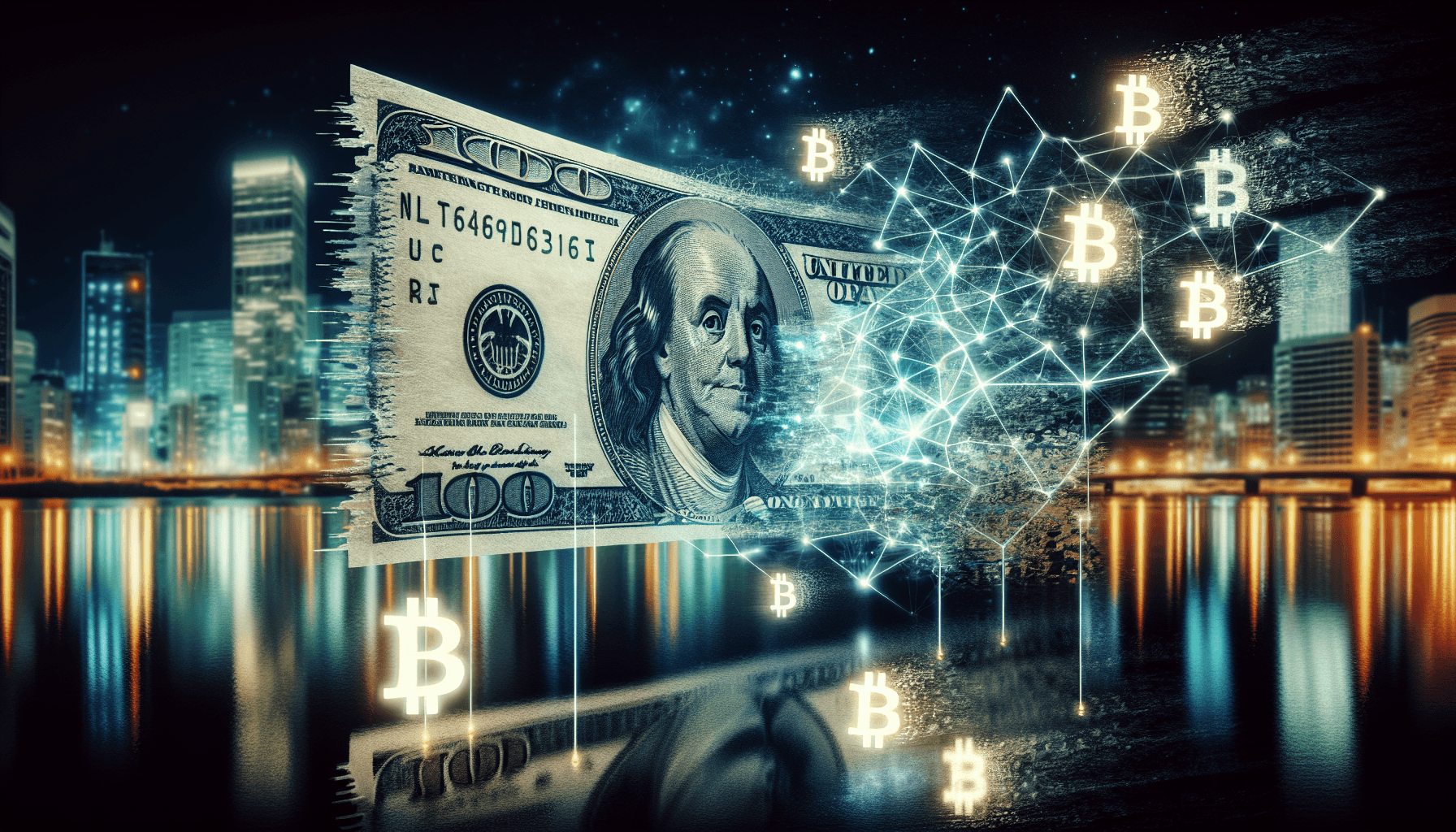
Call me cynical, but watching the global markets these days feels like a bizarre, never-ending circus. One minute, central bankers are whispering sweet nothings about stability; the next, a former president opens his mouth, and suddenly, the financial tectonic plates start grinding. This past week? That grinding came with a very distinct sound: the U.S. dollar wobbling, and Bitcoin, bless its digital heart, letting out a delighted chuckle as it rocketed past $89,000.
Let's rewind a bit. The dollar took a hit, not from some obscure economic indicator, but squarely from President Trump's remarks. When a former leader with an undeniable sway over a significant portion of the global narrative starts questioning the very bedrock of the world's reserve currency, markets don't just shrug; they twitch. Big time. And while gold, the original safe haven, naturally climbed to new record highs – because, well, old habits die hard – Bitcoin was right there, nipping at its heels, proving once again it's far more than just a tech curiosity.
The Dollar's Domino and Bitcoin's Bounce
The connection here isn't rocket science, folks. When confidence in the primary global currency falters, capital doesn't just sit still. It scrambles for shelter. For centuries, that shelter was gold – tangible, shiny, universally understood. Now? There's a new kid on the block, a digital chameleon that seems to thrive on the very uncertainty that plagues its traditional counterparts. Is it a true safe haven, a digital gold? Or is it simply a highly liquid asset that catches the eye of capital looking for any place to park that isn't the current hot mess? The jury's still out, but the pattern is undeniable.
This latest surge, pushing Bitcoin tantalizingly close to that psychological $90,000 mark, wasn't just some random algorithmic pump. It felt different. There's a growing sense that the market is maturing, learning to dance to a more complex tune. We're seeing analyses hinting at steadier market conditions, more robust liquidity, and a subtle but significant shift in investor behavior. Less wild leverage, more hedging. It's almost as if the smart money is getting a little less reckless, a little more strategic, treating Bitcoin not just as a gamble, but as a legitimate, albeit volatile, instrument for navigating an increasingly unpredictable global economy.
Beyond the Pump: The Hedging Narrative Takes Hold
Think about it: who's jumping into Bitcoin when the dollar looks shaky? It's not just retail FOMO anymore. It's institutions, corporations, and even savvy individual investors who understand that having a diversified basket of assets means looking beyond the traditional. They see a world where national currencies are increasingly subject to political whims and central bank policies that might not always prioritize long-term stability. Bitcoin, for all its volatility, offers an alternative; a decentralized asset not tied to any single government's fiscal gymnastics.
Is this the "flippening" of narratives, where Bitcoin definitively sheds its purely speculative skin for something more akin to a global macro hedge? Perhaps. Or maybe, just maybe, it's simply a testament to how quickly markets adapt, and how in a digital age, even the most ancient instincts – the flight to safety – find new, unexpected avenues.
My take? Don't mistake this for an all-clear signal to mortgage the house. Bitcoin is still Bitcoin; it's a wild ride. But its consistent reaction to traditional market tremors, particularly those originating from the very heart of the global financial system, tells a compelling story. It's a story of an asset class that is no longer content to play in its own sandbox, but is now a full-fledged player in the grand, chaotic theater of global finance. And honestly, it makes for damn good headlines.