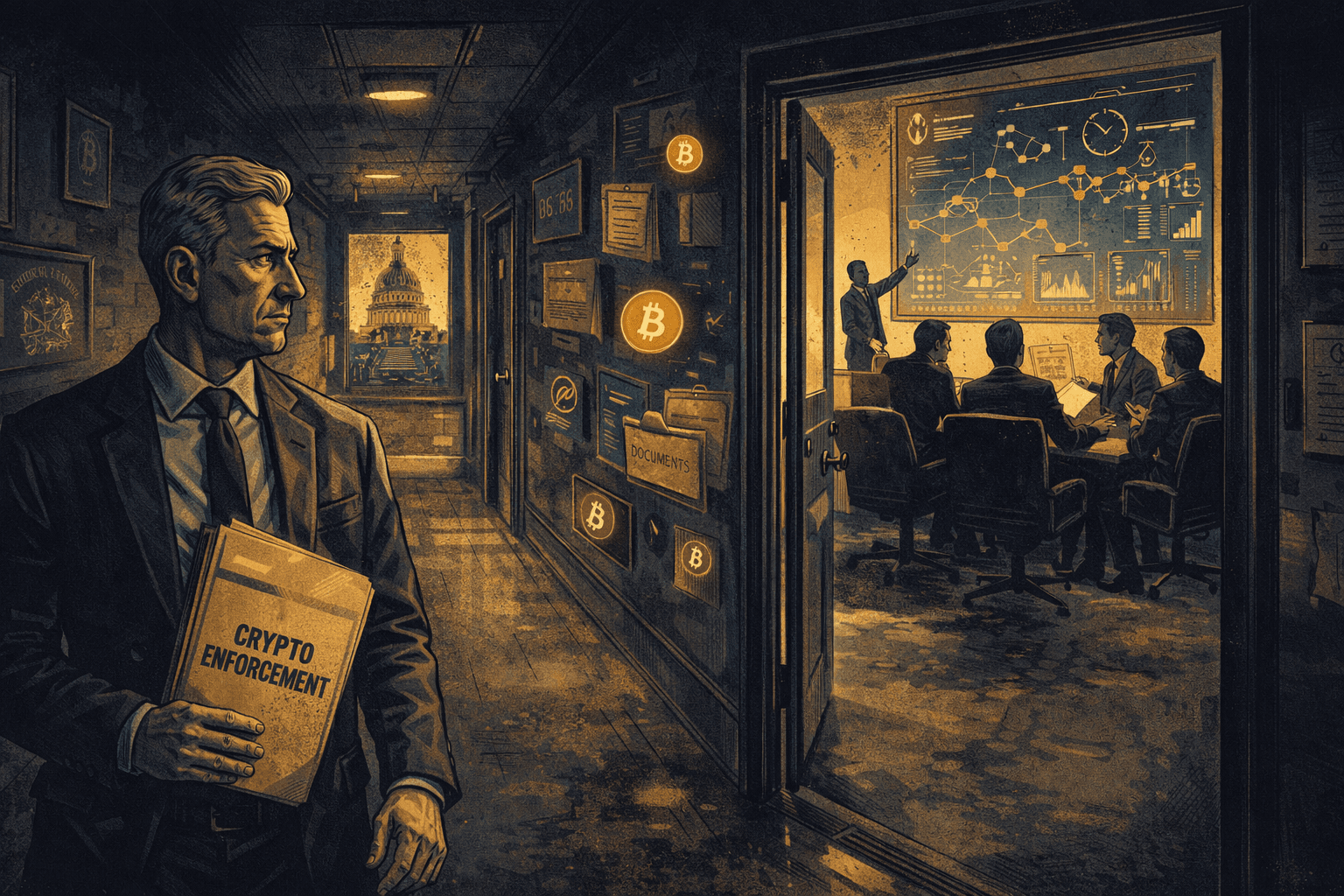
Sometimes, the market delivers a perfect distraction. BlackRock’s private credit fund hit a snag, and suddenly, the headlines are screaming about cracks in the institutional facade, impacting crypto prices. A blip. A tremor. Look, with a cynical eye, this is par for the course. Big money gets in, big money stumbles occasionally. But here’s the kicker: these little stumbles are just that – little. They hardly register against the colossal, grinding machinery of traditional finance (TradFi) now very deliberately embedding itself into our corner of the digital world.
The actual news, the stuff that ought to make you sit up and take notice, isn't about minor adjustments. It's about a systematic, almost overwhelming, move by financial leviathans and even sovereign states into crypto. This isn't the Wild West anymore; it's getting paved over, whether we like it or not.
Nation-States Placing Their Chips
Let's talk about sovereign interest, shall we? Kazakhstan’s central bank, for instance, is reportedly funneling a cool $350 million from its reserves into crypto-related companies and funds. Think about that for a second. This isn’t a tech bro with disposable income; this is a nation-state diversifying its war chest, staking a claim in the digital future. It speaks volumes, doesn't it? It suggests a recognition, at the highest levels, that crypto isn't just a fleeting trend but a legitimate asset class deserving of strategic investment.
Then there’s Russia, a country not exactly known for its progressive embrace of financial freedom, now considering simplified licensing paths for banks and brokerage firms to run their own crypto exchanges. Call it control, call it pragmatism, call it a desire to tax; whatever the motivation, it’s an admission. An admission that the genie is out of the bottle, and rather than trying to stuff it back in, they’d rather put a collar on it. Banks, those bastions of traditional finance, operating crypto exchanges? That's a profound shift, signaling an intent to weave digital assets deeply into existing financial architecture.
Building the New Rails: From Stablecoins to Street Access
It’s not just central banks; the infrastructure builders are relentless. Take Utexo, for example. They just bagged a $7.5 million seed round, co-led by none other than Tether itself, to build Bitcoin-native USDT settlement infrastructure. Now, "settlement infrastructure" might sound about as exciting as watching paint dry, but this is the bedrock. This is about making stablecoins, the workhorses of the crypto economy, move more efficiently and securely on the foundational blockchain: Bitcoin. It's the kind of unglamorous, absolutely critical work that enables broader adoption and smoother integration with legacy systems. Without these digital rails, the whole train grinds to a halt.
And then there's Strike, Jack Mallers' company, which just wrangled a BitLicense and a money transmitter license from the notoriously stringent New York State Department of Financial Services. Let me tell you, getting a BitLicense in New York is like trying to extract a wisdom tooth with a pair of pliers – it's painful, drawn-out, and only for the most determined. This isn't just a pat on the back; it's a green light to offer Bitcoin financial services to residents in one of the world's financial epicenters. It means Bitcoin, in a state that has historically been incredibly wary, is now open for business, for real people, with real money.
The Inevitable March
So, while a particular BlackRock fund might hit a minor speed bump, casting a shadow that briefly dampens market sentiment, the bigger picture remains crystal clear. We're witnessing a slow, deliberate, and utterly unstoppable march of institutions into crypto. They're not just dipping their toes; they're building bridges, changing regulations, and investing serious capital.
Is this the decentralized future we all dreamed of, free from the clutches of the old guard? Probably not entirely. But it is the future where crypto is no longer a niche fascination. It's becoming an integral, if still volatile and often exasperating, part of the global financial conversation. The occasional "crack" in an institution's fund isn't a sign of failure; it's just the sound of the old world grinding against the new, slowly but surely, merging into something nobody quite predicted. And Alex, for one, finds that endlessly fascinating, if a touch grim.