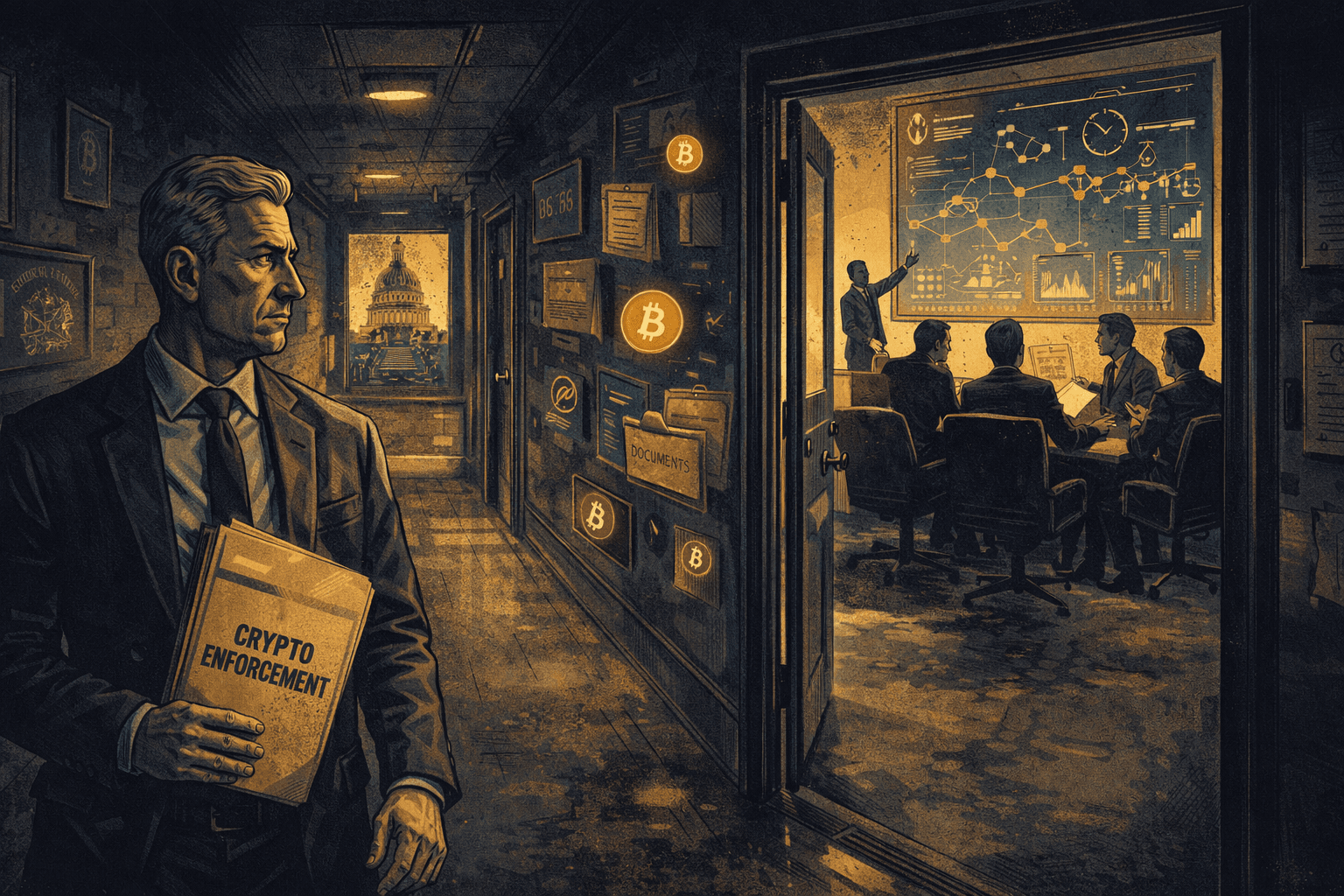
There's a familiar script playing out in crypto-land, but this one feels particularly charged. It’s the story of a titan, Binance, fighting not just a headline, but a narrative. The kind of narrative that, left unchecked, could chip away at its painstakingly rebuilt image and, more broadly, at crypto’s slow march towards mainstream acceptance. We're talking about a gloves-off legal threat against none other than The Wall Street Journal.
The bone of contention? A recent WSJ investigation, which, depending on who you ask, either exposed gaping holes in Binance’s sanctions compliance or spun a malicious web of lies. The report allegedly laid out how the colossal exchange facilitated billions in transactions linked to Iran, a country under stringent international sanctions. Now, for any global financial player, that’s a red flag big enough to be seen from orbit. For Binance, an entity only recently emerging from a colossal $4.3 billion settlement with the U.S. Department of Justice and a leadership shake-up, such an accusation is more than just inconvenient; it’s a direct assault on its hard-won, albeit still shaky, legitimacy.
Binance CEO Richard Teng didn’t mince words when he confirmed the counter-punch on February 24th. The exchange, he stated, formally challenged the report and sent a legal demand to the WSJ, seeking corrections and a full retraction. This isn't some meek press release or a carefully worded blog post; it’s a declaration of war in the legal arena. They're calling it defamation, implying the reporting was not just inaccurate, but actively harmful and reputation-damaging.
But let's be real for a moment. Sanctions compliance in the crypto space is a hydra-headed beast. How do you effectively police billions of transactions across borders, often with pseudonymous actors, and still claim to be truly global? Is perfect compliance even a thing, or just a regulatory ideal that moves the goalposts as fast as the tech evolves? This isn't to excuse potential missteps, mind you, but merely to acknowledge the sheer, mind-numbing complexity of the task. Traditional finance, with its established choke points and centralized control, still struggles with this. Imagine trying to do it in the wild, untamed frontier of digital assets.
This isn't just a spat between a media giant and a crypto behemoth. This is a bellwether for the entire industry. If the biggest players are constantly under the microscope for sanctions evasion, what message does that send to the policymakers and institutional investors they're so desperately trying to court? It reinforces the perception that crypto remains a haven for illicit finance, an argument regulators love to wield like a blunt instrument.
So, who's telling the unvarnished truth here? Is the WSJ a diligent watchdog uncovering inconvenient facts, or a powerful publication making sensational claims that miss critical nuances? Is Binance a genuinely compliant entity defending its honor, or a corporate behemoth trying to silence critical reporting? Perhaps, as is often the case in this convoluted world, the truth lies somewhere in the messy middle, obscured by legal jargon, PR spin, and the sheer complexity of operating a global financial network in a world still wrestling with what crypto even is. One thing’s for sure: the legal battle lines are drawn, and the implications ripple far beyond just two corporate entities. This is about trust, perception, and the very future of how crypto interacts with the established world order.