A Half-Billion Dollar Strategic Crypto Stake
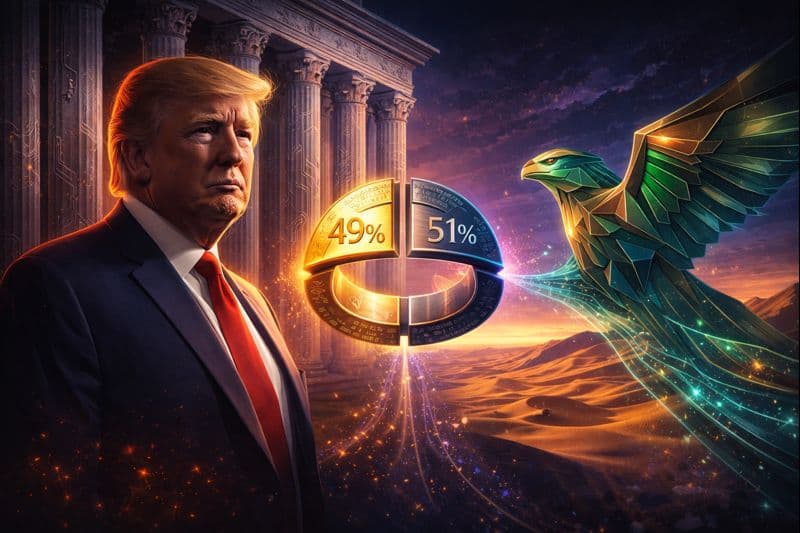
A cryptocurrency startup tied to former U.S. President Donald Trump, World Liberty Financial, has drawn global attention after a UAE-backed investment vehicle agreed to acquire 49 % of the company for approximately $500 million, according to a report by The Wall Street Journal.
The deal was orchestrated in January 2025, just days before Trump’s return to the White House, and wasn’t publicly disclosed until now. The buyer, a UAE entity called Aryam Investment 1 backed by Sheikh Tahnoon bin Zayed Al Nahyan, signed the agreement that saw half the payment delivered upfront, with about $187 million directed to Trump-family-controlled entities and additional millions to affiliates of World Liberty’s co-founders.
This transaction makes Aryam the largest outside shareholder in World Liberty Financial, reshaping the company’s ownership structure significantly and prompting scrutiny about financial influence, political optics, and broader geopolitical ties.
A Deal with High Stakes and Delicate Timing
The timing of the investment mere days before Trump’s second inauguration has raised eyebrows among industry watchers and political analysts alike. Because the transaction was not publicly disclosed at the time, questions have emerged about transparency and the potential implications of such a major foreign capital infusion into a firm closely associated with a sitting U.S. president’s broader business interests.
Half of the agreed $500 million was paid immediately, with the remaining portion structured into future payments. A portion of the upfront funds flowed not only to Trump-linked entities but also to affiliates of Steve Witkoff’s family, the real estate figure who co-founded World Liberty and once served as U.S. special envoy to the Middle East, and to other co-founders of the crypto project.
World Liberty and representatives associated with the White House later denied that the deal involved any government access or influence, stressing that President Trump’s assets are held in a blind trust managed by his children.
Geopolitical and Tech Context
The deal doesn’t exist in a vacuum. Sheikh Tahnoon, the figure backing Aryam Investment 1, is a powerful Emirati leader and national security adviser whose influence spans technology and finance. His efforts to secure access to advanced American artificial intelligence chip technology previously restricted by the Biden administration gained traction following policy changes after Trump’s election, further complicating the narrative around foreign investment and strategic tech access.
Executives associated with G42, a UAE tech firm also connected to the sheikh’s interests, took board seats at World Liberty as part of the acquisition, signaling deeper operational ties between the Emirati investor and the crypto venture.
What the Scrutiny Centers On
Critics of the deal argue that the circumstances, including timing, scale, and political proximity, merit closer examination of transparency, conflict-of-interest concerns, and financial disclosure norms. Democratic lawmakers previously called for investigations into alleged links between World Liberty token sales and sanctioned actors, and the ownership shift adds another layer of complexity.
Supporters of the investment, however, frame it as a strategic capital infusion intended to fuel growth in blockchain infrastructure, stablecoin use, and digital finance products that World Liberty aims to develop, separate from political influence.
Broader Implications for Crypto and Policy
The acquisition highlights a broader theme unfolding at the intersection of technology, geopolitics, and financial markets:
Foreign capital entering U.S.-linked crypto ventures at scale
Sensitive tech access shifts tied to diplomatic relationship changes
Growing importance of stablecoins and blockchain financial infrastructure in global deals
While both sides contend the transaction was professional and commercially motivated, its timing and opacity are likely to sustain debate about regulatory oversight, ethics rules, and the influence of foreign investment in sectors adjacent to national strategy.