That familiar chill is creeping back, isn't it? It’s not just the usual market jitters; there’s a deeper, more unsettling anxiety permeating the digital airwaves. The crypto faithful, accustomed to shrugging off mere dips as "buying opportunities," are now finding themselves in a very different kind of storm. This isn't just about charts and trend lines anymore; it's about the cold, hard hand of global reality yanking our nascent industry back down to earth.
The Geopolitical Furnace and Bitcoin’s Identity Crisis
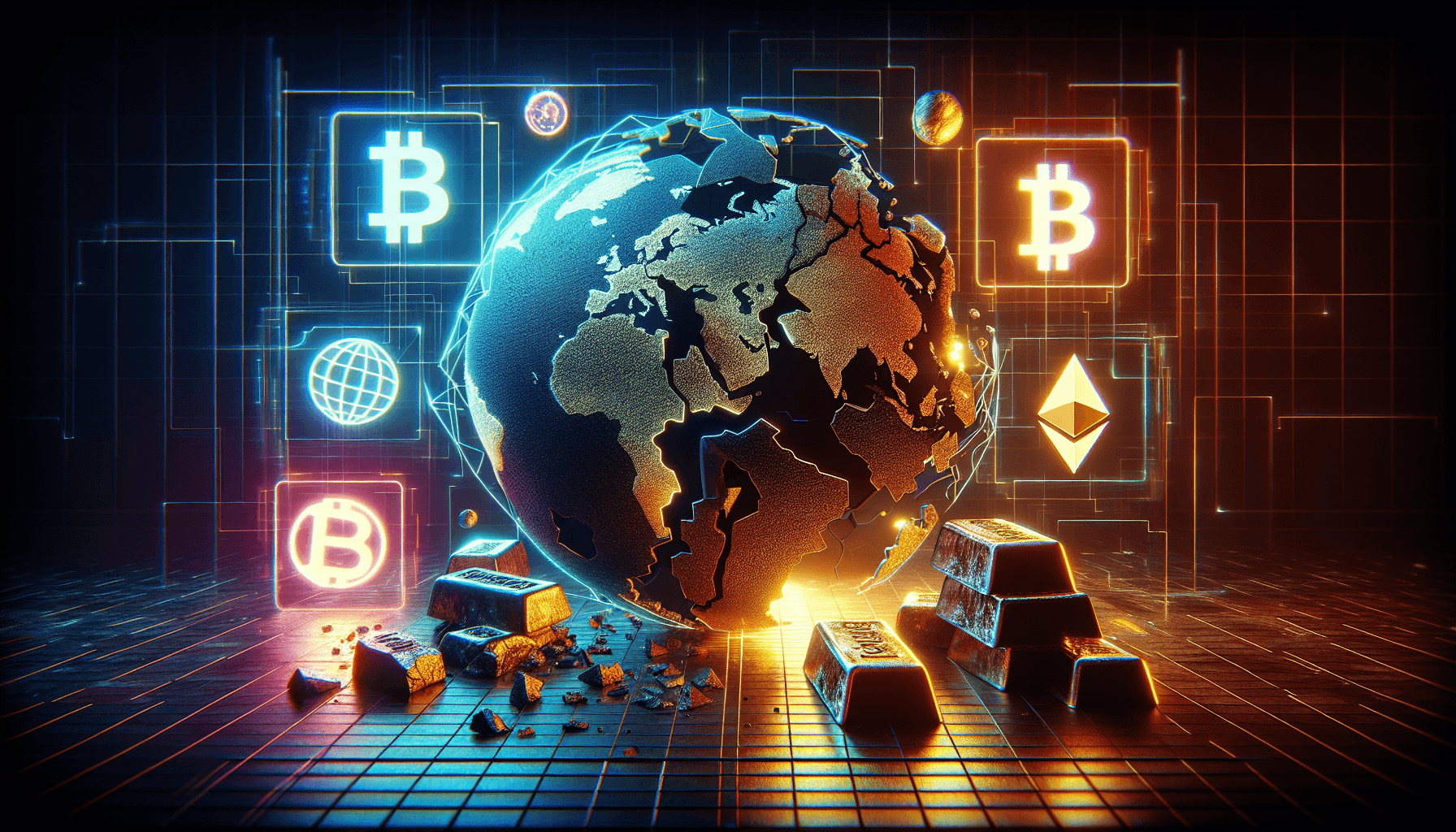
Forget your immaculate technical analysis for a moment. Look outside. The geopolitical furnace, stoked white-hot in the Middle East, is melting away any lingering illusions of crypto’s gilded cage. As reports suggest the US might be inching closer to a direct confrontation with Iran, traders aren't scrambling for digital assets. They're doing exactly what humans have done for millennia when things get scary: they're piling into safe havens. Gold is soaring, crude oil prices are on the rise, and Bitcoin? Well, Bitcoin is slipping.
For years, we’ve heard the refrain: Bitcoin is digital gold. A hedge against inflation, a sovereign store of value, detached from the whims of governments and traditional finance. But when the chips are down, when the missiles are flying (or threatening to), the market's gut reaction is stark. It’s gold bars and barrels of oil, not satoshis. The Bitcoin-to-gold ratio is dropping like a stone, now sitting at a humble 13.46. It’s a pretty damning indictment, isn't it? Even veteran analyst Willy Woo, a man not prone to hyperbole, now believes gold will likely outperform Bitcoin for years, pointing to a broken 12-year uptrend and even whispering about a "quantum cloud" hanging over BTC’s long-term cryptographic security. Talk about throwing a wrench in the narrative.
And if retail traders are spooked, institutional players are simply bolting for the exits. CoinShares just reported a staggering $173 million outflow from crypto investment products in a single week. Over the last month, that figure balloons to a mind-numbing $3.74 billion. These aren't small-time speculators; these are the big guns, pulling their capital as Bitcoin hovers around $67,000, caught in a bearish, tight range. Their flight isn’t just a market signal; it’s a vote of no confidence in the short-term stability of the whole damn ecosystem.
Solana’s Descent: From Darling to Downer
While Bitcoin grapples with its existential crisis, high-beta altcoins are getting absolutely hammered. Take Solana. A darling of the bull run, known for its speed and sleek aesthetics, it's now looking mighty vulnerable. Its dApp revenues are shrinking, a stark indicator of dwindling utility and engagement. Institutional and retail interest? Practically non-existent.
Analysts are openly targeting $50 for SOL in the short-term, a price point that would erase a significant chunk of recent gains. The $78-$80 support level, once seen as a sturdy floor, now feels like a thin sheet of ice ready to crack. Even its MVRV indicator, which measures market value against realized value, is screaming "extreme." Is that a sign of an impending bounce, or just the market's way of saying, "You went too far, too fast"? My money's on the latter. This isn't just a healthy correction; it’s a painful re-calibration, reminding everyone that what goes up like a rocket can come down just as quickly when the fuel runs out, or when the world decides it has bigger problems to worry about.
The Short-Term Stress Test: Bottom or Just a Breather?
Some optimists might point to Bitcoin's "short-term holder stress" metric, which has reportedly plunged to lows not seen since 2018. In the crypto lexicon, that often signals capitulation, a market bottom. Are we there yet? Maybe. But here’s the cynical truth: a bottom often looks a lot like a prolonged period of misery, not a quick bounce. It's a grueling test of resolve, where paper hands are flushed out, and only the truly delusional, or truly conviction-driven, remain.
The muted recovery in assets like Hedera (HBAR), despite some promising derivative signals, further underscores the cautious sentiment gripping the market. No one's eager to rush back in while the global picture remains so murky. This isn't just about market cycles; it's about the pervasive unease that comes when the headlines scream "war" and the safest assets are the ones you can hold in your hand, or store in a physical vault.
So, where do we go from here? The illusion of crypto operating in a vacuum has been shattered, violently so. We’re in a new, more mature, and undeniably more brutal phase. The market is being forced to confront the fact that it is, like all markets, a reflection of human psychology – and right now, that psychology is driven by fear, not greed, and by a desperate scramble for safety in an increasingly unstable world. Buckle up; this ride just got a whole lot bumpier.